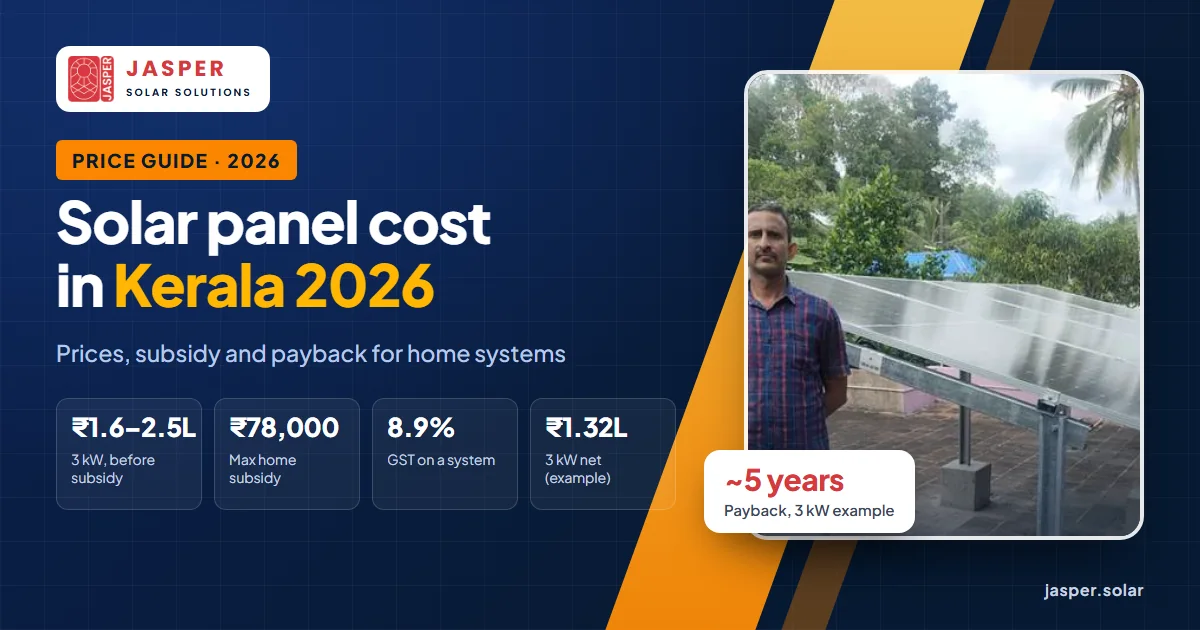
- Installers' published 2026 estimates put a 3 kW on-grid rooftop system in Kerala at roughly ₹1.6 lakh to ₹2.5 lakh before subsidy.
- The PM Surya Ghar subsidy takes up to ₹78,000 off for homes (3 kW and above), but it is paid after commissioning, so you pay the full price first.
- Price differences come from panel type and DCR status, the inverter, the structure, and roof access, not just the kW size.
- A very cheap quote often means non-DCR panels (no subsidy), thin structures or missing protection. Always compare itemised quotes.
"How much does solar cost?" is the first question every homeowner asks, and the honest answer is a range. This guide shows what Kerala homes are paying in 2026, how the subsidy changes the final cost, what drives the price up or down, and how quickly the system pays for itself.
What a 3 kW system costs in 2026
Several installers published 2026 price estimates for a 3 kW on-grid home system, before subsidy:
| Source (2026 estimate) | 3 kW before subsidy |
|---|---|
| SolarSquare, Kerala | ₹2,00,000 to ₹2,50,000 |
| Bluebird Solar, Kerala | ₹1,70,000 to ₹2,20,000 |
| Avaada, India | ₹1,60,000 to ₹2,15,000 |
| GreenTechLead, India | ₹1,65,000 to ₹2,10,000 |
That works out to roughly ₹53,000 to ₹83,000 per kW. These are market estimates, not fixed prices. Your quote depends on your roof and the equipment chosen.
Cost after subsidy, by system size
The table uses an example price of ₹70,000 per kW, including GST, which sits within the 2026 market range. The subsidy is the central PM Surya Ghar amount for homes.
| System | Example price | Subsidy | Your net cost | Monthly units |
|---|---|---|---|---|
| 1 kW | ₹70,000 | ₹30,000 | ₹40,000 | ~120 |
| 2 kW | ₹1,40,000 | ₹60,000 | ₹80,000 | ~240 |
| 3 kW | ₹2,10,000 | ₹78,000 | ₹1,32,000 | ~360 |
| 5 kW | ₹3,50,000 | ₹78,000 | ₹2,72,000 | ~600 |
The table uses one flat rate for simplicity. In practice, larger systems often cost a little less per kW, because fixed costs like installation and paperwork are spread over more panels. The subsidy is most generous on the first 2 kW and stops rising at 3 kW, so every kW above 3 kW is paid in full. See our subsidy guide for eligibility and the application steps.
What makes one quote higher than another
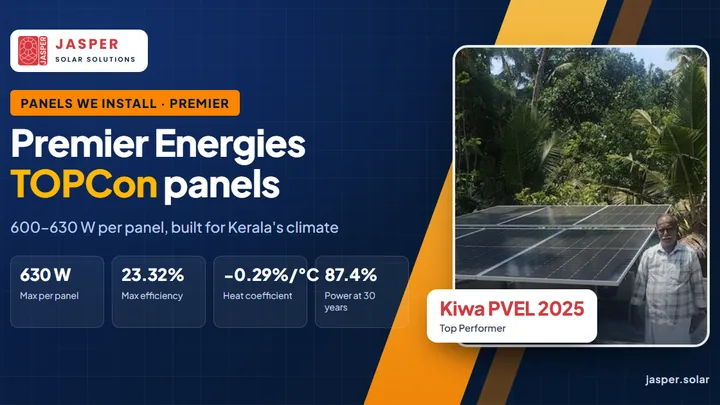
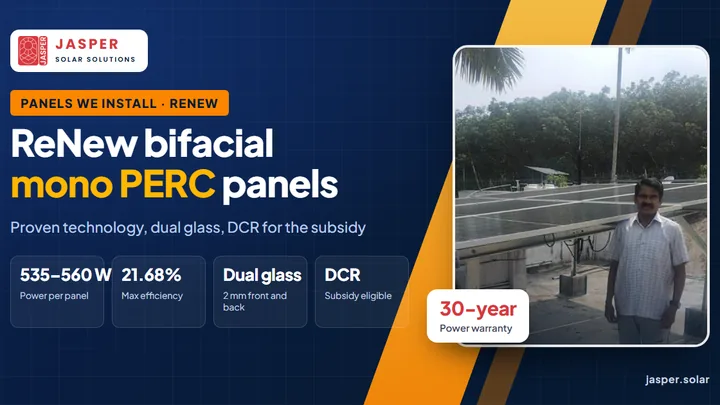
- Panels: DCR panels, made with Indian cells, cost more than imported-cell panels but are required for the subsidy. Higher-efficiency TOPCon panels, such as Premier Energies' 630 W, can cost slightly more per watt than proven mono PERC panels such as ReNew's bifacial range.
- Inverter: a standard string inverter is the lowest-cost option. Panel-level optimizers such as SolarEdge cost more but recover output on shaded roofs.
- Structure: elevated hot-dip galvanized steel structures that keep a terrace usable cost more than low frames, and thicker galvanizing lasts longer in coastal air.
- Battery: a hybrid system adds a battery and a hybrid inverter, and batteries carry 18% GST.
- Site work: roof height, cable length from roof to meter, and access for lifting panels all affect labour.
- GST: panels and inverters are now taxed at 5%, the rest at 18%, so the overall rate on a system is about 8.9%. Our GST guide explains the split.
How fast does it pay back?
Payback is your net cost divided by what you save on electricity each year. For a 3 kW home system:
- Generation: about 360 units a month, or 4,320 units a year.
- Saving: at an assumed ₹6 per unit, about ₹25,900 a year.
- Payback: ₹1,32,000 ÷ ₹25,900 ≈ 5.1 years, from a system with a 25-year panel performance warranty.
Your actual saving depends on your tariff slab and how much of the output you use directly. Try the savings calculator for your own bill.
Costs people forget to ask about
- KSEB application and feasibility fees
- The net meter, if you choose to buy one rather than wait for KSEB's supply
- Extra structure height for a usable terrace, or extra cable length to a distant meter
- An annual maintenance contract after the free service period
Ask for each of these in writing, so two quotes can be compared fairly.
Red flags in a cheap quote
- Panel make and model not named, or non-DCR panels on a subsidy project
- No structure specification: galvanizing thickness, wind-load design or anchoring method
- No earthing, lightning arrester or surge protection listed
- Vague warranties, or warranties with no local service contact
Our guide on how to choose a solar company in Kerala lists the checks to make before you sign.
Common questions
Is the subsidy deducted from the price?
No. You pay the installer the full price, and the subsidy is credited to your bank account after KSEB commissions the system.
Are there EMI or loan options?
Yes, several banks offer loans for home rooftop solar. Depending on the loan tenure, your monthly bill saving can offset part or all of the EMI.
Why is 3 kW such a common size?
It gets the full ₹78,000 subsidy, makes about 360 units a month, which covers the use of many Kerala homes, and fits on most terraces.
Get an exact, itemised price for your roof. Book a free site visit and we will design the system and show the subsidy, net cost and payback in one quote.